


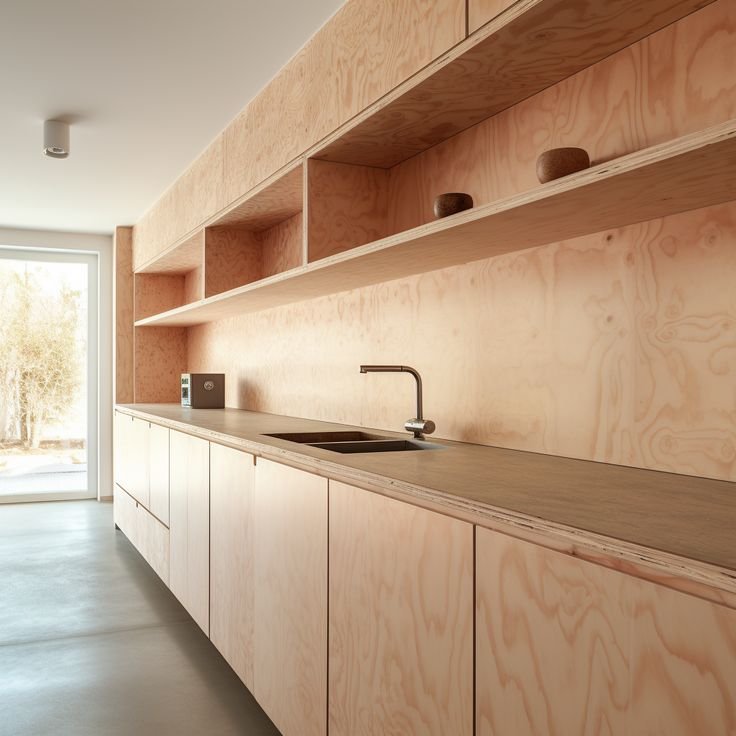
Imagine this: You’re managing a busy factory expansion or a warehouse build, and rain begins during construction. Water damage could impact your timeline and budget. Now picture plywood that resists moisture while keeping your project environmentally friendly and compliant with strict industrial standards. That’s the promise of eco-friendly water-resistant plywood, and it’s a reality today. As industries strive for sustainability amidst climate challenges, these options offer durability without the environmental guilt. Let’s explore why they’re important and how Marcoply makes it easy to choose wisely.
Why Industrial Projects Demand Water-Resistant Plywood
Industrial settings can be tough—think of the humidity in food processing plants, chemical spills in manufacturing facilities, or coastal warehouses facing salty air. Standard plywood tends to warp, delaminate, or mold when exposed to moisture, leading to expensive repairs and safety hazards.
Water-resistant plywood is engineered with resins like phenolic or melamine that bond layers tightly, resisting swelling by up to 70% compared to regular plywood (according to BIS standards). A 2023 study by the Forest Stewardship Council (FSC) found that 40% of industrial failures are due to moisture-related plywood issues, which increase replacement costs by 25%.
Here’s the benefit for forward-thinking companies: Combining water resistance with eco-friendliness is not a compromise. These boards use fast-growing eucalyptus or bamboo cores, reducing deforestation by 50% compared to tropical hardwoods, as reported by the Wood Products Council.
Quick Tip: For high-traffic areas like loading docks, choose BWR (Boiling Water Resistant) grade—certified to withstand 72-hour boils without failing.
The Eco-Friendly Edge: Sustainable Sourcing Meets Strength
Sustainability is not just a trendy term; it is essential for business. With India’s plywood market expected to reach ₹50,000 crore by 2027 (according to a FICCI report), there is an increasing need for green alternatives that lower carbon footprints without sacrificing performance.
Eco-friendly water-resistant plywood excels in this area. It replaces formaldehyde-heavy glues with low-emission alternatives like soy-based or PF (phenol-formaldehyde) resins, complying with E1 emission standards (under 0.124 mg/m³ formaldehyde). Many brands source their materials from FSC-certified plantations, ensuring there is no illegal logging—important given that 15% of global timber is illegally harvested.
Take Marcoply, for example: We provide a wide range of plywood and veneer products designed for various residential, commercial, and industrial needs. Our water-resistant options, like MR (Moisture Resistant) and BWR grades, use responsibly sourced poplar and eucalyptus, treated with non-toxic waterproofing. The result? Boards that last 2 to 3 times longer in wet industrial conditions and qualify for green building certifications like IGBC or LEED.
Real-World Example: A shipyard in Kerala switched to our eco BWR plywood for hull formwork. They reduced moisture failures by 60% and earned sustainability credits, saving ₹5 lakhs each year.
Top Eco-Friendly Water-Resistant Options for Industry Pros
Not all “green” plywood is equal. Here’s a breakdown of standout choices, tailored for industrial grit:
- FSC-Certified BWR Plywood: Boils tough; ideal for chemical plants. Water absorption? Under 5%. Eco-win: Renewable sourcing cuts CO2 by 30% per sheet.
- MR Grade with Bio-Resins: Budget-friendly for packaging lines. Resists steam and spills; E0 emissions for worker safety. Stats show it extends shelf life by 40% in humid factories.
- Marine-Grade Eco Plywood: For coastal industries like fisheries. Phenolic cores handle saltwater; zero tropical hardwood. A 2024 ASTM test rated it 90% stronger post-immersion.
- Film-Faced Variants: Overlay boosts cleanability for pharma floors. Phenolic film repels oils; recyclable cores align with circular economy goals.
Pro Tip: Layer with edge-sealing tapes for 20% extra protection in high-humidity zones (90%+ RH). Always check IS:710 certification for boiling resistance.
At Marcoply, our portfolio covers these precisely—custom thicknesses from 12mm to 25mm, ensuring your conveyor frames, false ceilings, or partitioning walls stay robust and planet-friendly.
Benefits That Stack Up: Cost, Compliance, and Longevity
Making the switch brings quick returns. Eco water-resistant plywood cuts lifecycle costs by 15 to 20% due to fewer replacements (according to Indian Plywood Industries Research Institute data). It complies with industrial regulations like OSHA for mold prevention and EU REACH for low VOCs, essential for export-oriented factories.
From an environmental perspective, it performs well: Producing one cubic meter generates 40% less CO2 than concrete alternatives. Workers benefit from fewer allergens, leading to a 10% increase in productivity (according to ILO studies).
Case Study Spotlight: An automotive parts manufacturer in Coimbatore using Marcoply’s green BWR plywood for wet-assembly lines reported no delamination over two monsoons, plus a 25% reduction in landfill waste.
Implementation Tips for Seamless Integration
Ready to upgrade? Start with a site audit: Measure humidity levels and load requirements. Pair plywood with vapor barriers in super-wet areas.
- Test samples in real conditions before bulk buys.
- Train teams on proper storage (elevated, covered stacks).
- Integrate schema markup on your site for “eco plywood suppliers” to boost SEO leads.
Marcoply streamlines this—our experts guide specs, from CAD drawings to delivery in Kerala and beyond.
Build Green, Build Strong—Your Move
Eco-friendly water-resistant plywood is not just a material; it is your advantage for sustainable industrial success. It meets rigorous demands while protecting the planet, proving that you can have durability, compliance, and a conscience.
At Marcoply, we are ready to supply plywood that supports your vision. Do you want to waterproof your next project sustainably? Contact us today for samples, quotes, or a free consultation.
What is your biggest moisture challenge? Share your thoughts below—we’re here to help!